

Martin Michette
Copyright Martin Michette and Historic Royal Palaces, licensed under a CC BY-ND-NC 4.0 license
Copyright Martin Michette and Historic Royal Palaces, licensed under a CC BY-ND-NC 4.0 license
Copyright Martin Michette and Historic Royal Palaces, licensed under a CC BY-ND-NC 4.0 license
Copyright Martin Michette and Historic Royal Palaces, licensed under a CC BY-ND-NC 4.0 license
Copyright Martin Michette and Historic Royal Palaces, licensed under a CC BY-ND-NC 4.0 license
Copyright Martin Michette and Historic Royal Palaces, licensed under a CC BY-ND-NC 4.0 license
Copyright Martin Michette and Historic Royal Palaces, licensed under a CC BY-ND-NC 4.0 license
Copyright Martin Michette and Historic Royal Palaces, licensed under a CC BY-ND-NC 4.0 license
Copyright Martin Michette and Historic Royal Palaces, licensed under a CC BY-ND-NC 4.0 license
Copyright Martin Michette and Historic Royal Palaces, licensed under a CC BY-ND-NC 4.0 license
Copyright Martin Michette and Historic Royal Palaces, licensed under a CC BY-ND-NC 4.0 license
Copyright Martin Michette and Historic Royal Palaces, licensed under a CC BY-ND-NC 4.0 license
Copyright Martin Michette and Historic Royal Palaces, licensed under a CC BY-ND-NC 4.0 license
Copyright Martin Michette and Historic Royal Palaces, licensed under a CC BY-ND-NC 4.0 license
Copyright Martin Michette and Historic Royal Palaces, licensed under a CC BY-ND-NC 4.0 license
Copyright Martin Michette and Historic Royal Palaces, licensed under a CC BY-ND-NC 4.0 license
Copyright Martin Michette and Historic Royal Palaces, licensed under a CC BY-ND-NC 4.0 license
Copyright Martin Michette and Historic Royal Palaces, licensed under a CC BY-ND-NC 4.0 license
Good morning everyone. It's wonderful to see you all here today, to be able to catch up with some of you properly for the first time in over 2 years and to meet others for the first time.
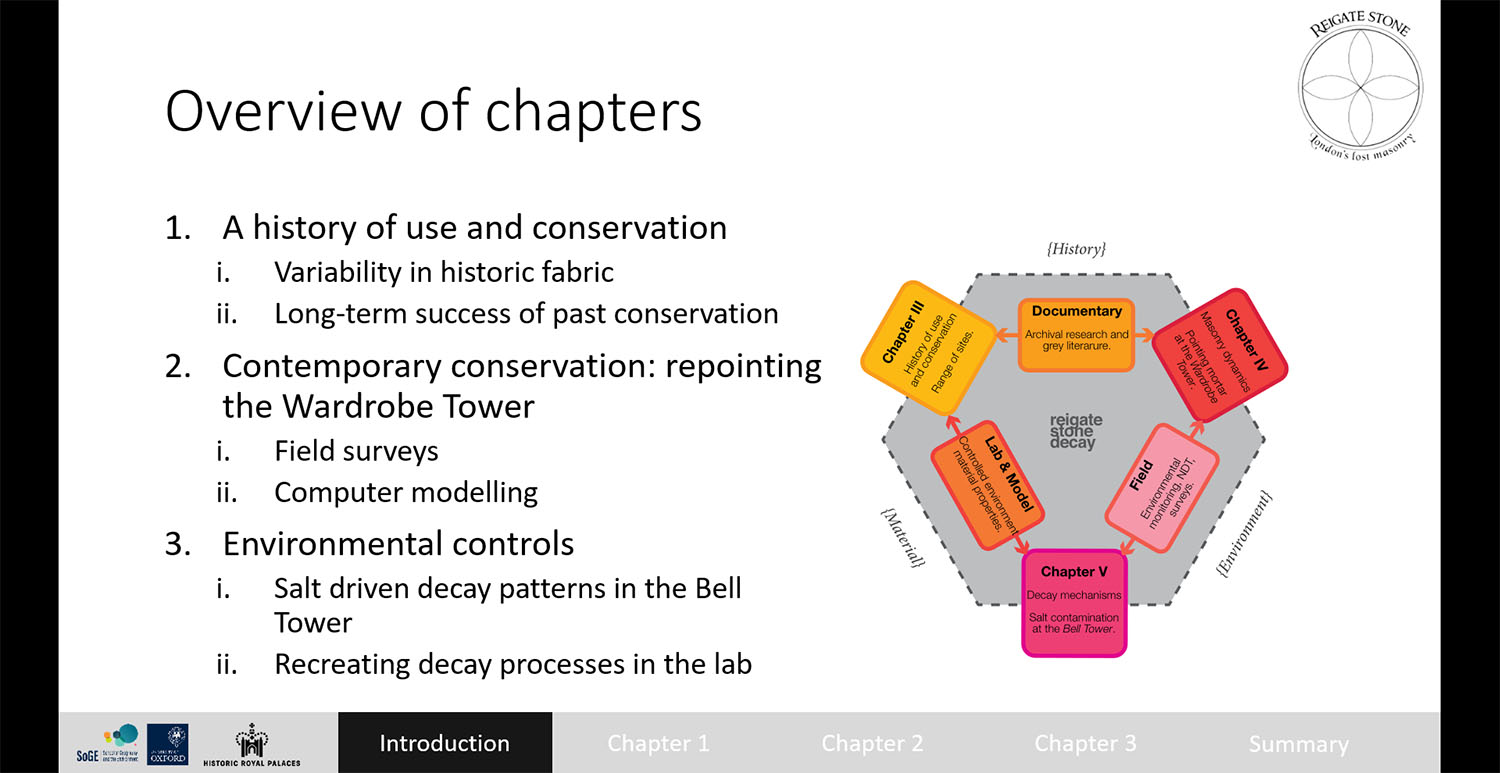
Today I'm going to give you an overview of my doctoral thesis. I'm going to try and break it down into a series of bitesize findings, particularly those that I think are most relevant to conservation practice, and make some suggestions for future research. And these will reflect the three main chapters of my thesis.
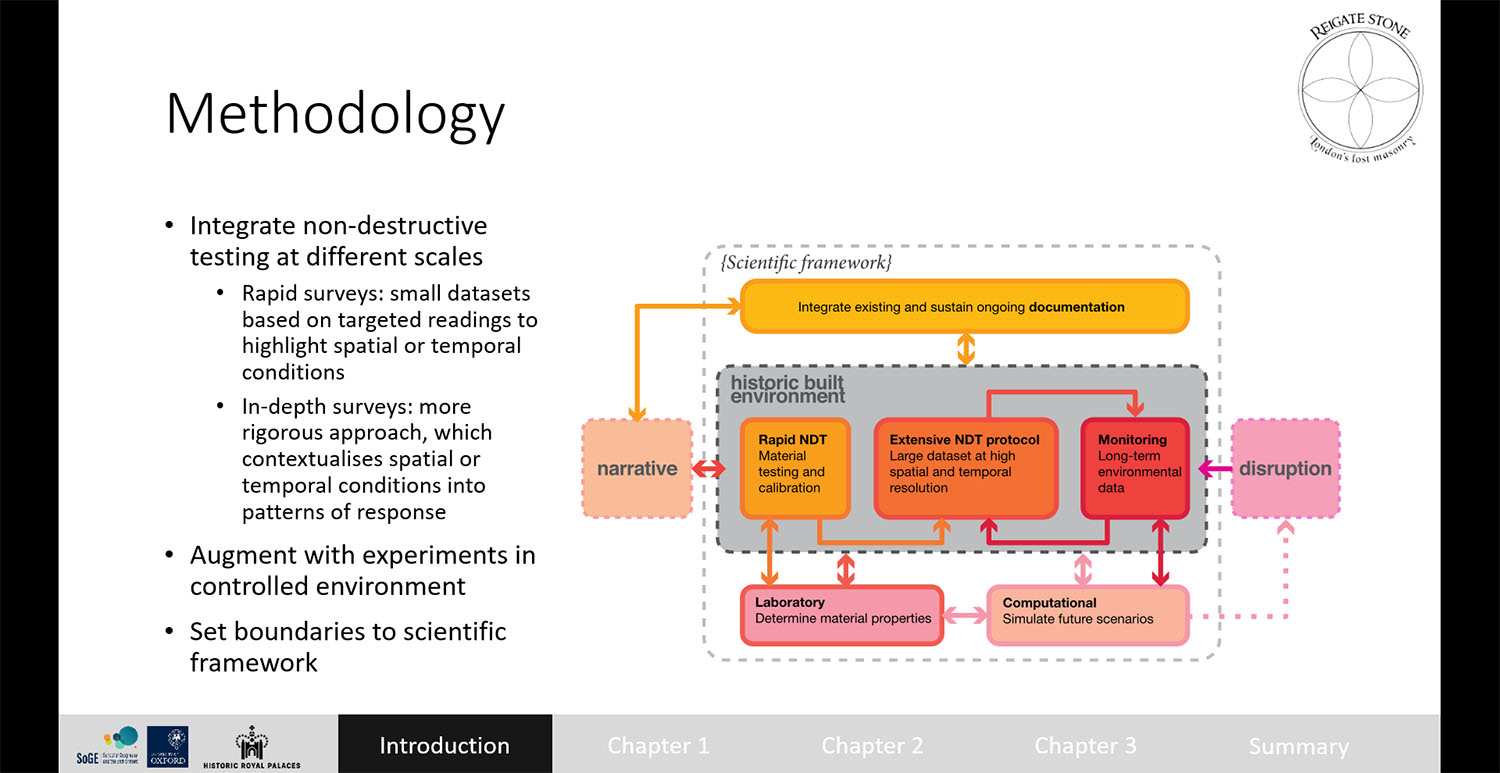
I'm going to talk a bit about the stone itself and its history of use and conservation, and propose that its perception as a poor-quality building stone may have more to do with misuse. I'm going to talk about what we learnt from the most recent large Reigate Stone conservation project here at the Tower of London, the work done at the Wardrobe Tower. And I'm going to talk briefly about diagnosing decay processes in Reigate Stone. And as you can see, each of these chapter is broken into 2 sub-chapters, which reflect individual projects or case-studies and which represent pieces of published work. And I've put the links to those publications in this presentation. Because of time, I'm only going to touch upon the methods that were used, but to give an overview, I used a scientific framework for analysing Reigate Stone in the historic built environment, which at its centre integrated different non-destructive surveys. Some were rapid and repeated across several different buildings, others were in-depth, and focused on a single area. These were augmented with laboratory studies and computer simulations, but also with extensive documentary research. And I tried to constantly stay aware of the forces which affect this system dynamics that cannot be adequately described using scientific method, such as the notion of narrative, the values and constructs that we associate with the historic environment. So specific techniques were only ever a small part of this larger jigsaw, but I'm very happy to go over any of them in more detail if people have questions later.
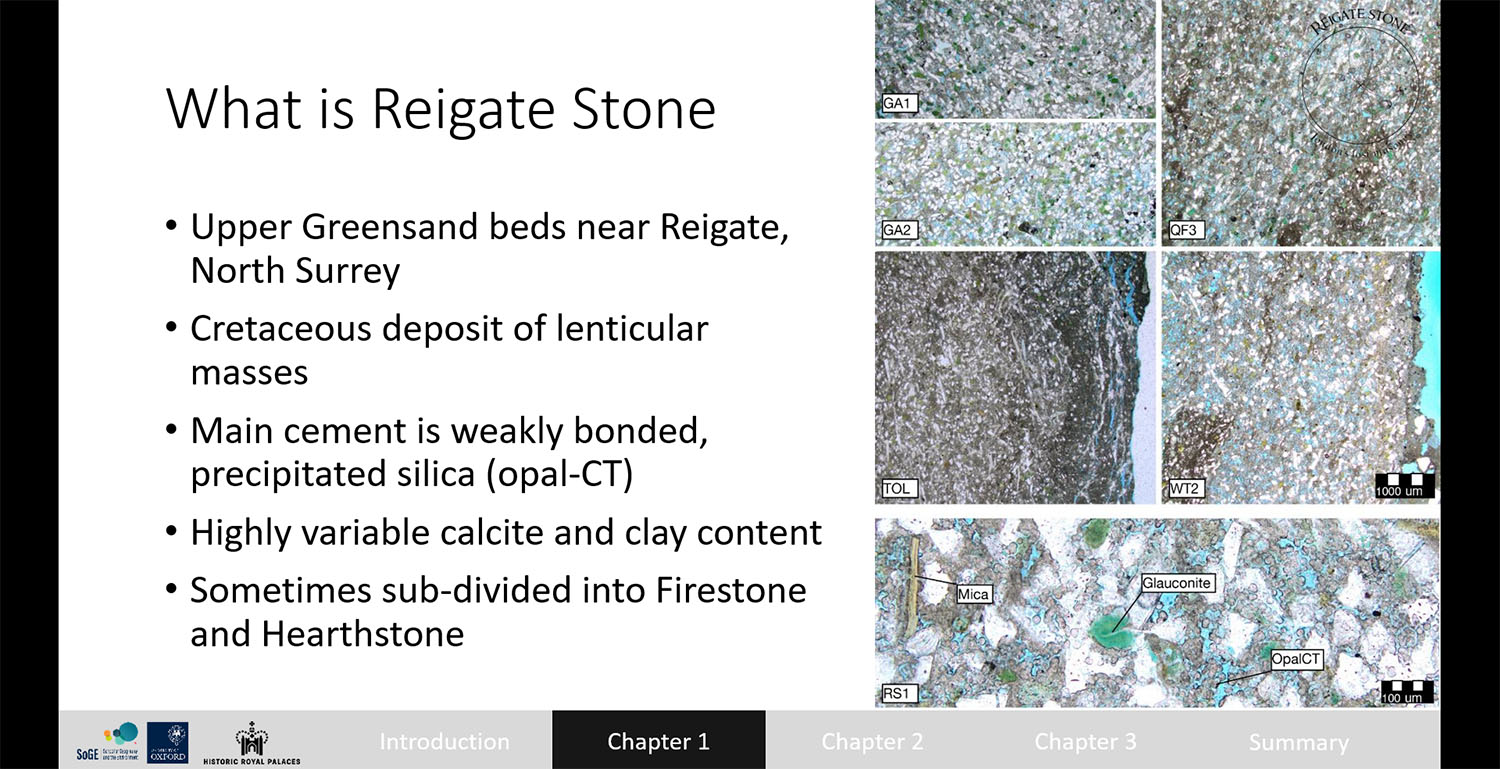
The first chapter was quite broad in its ambition, but it can be best summarised as an attempt to unify current knowledge and past practice, a kind of foundation for the rest of the project. The first part integrated a historical overview of changes in use with an updated material analysis, and the second part assessed different conservation techniques that have been used and their long-term efficacity. The historical overview was basically a deep literature review, and what I attempted to do was frame Reigate Stone within a shifting socio-economic and a scientific context. Let's start with the scientific context. And by that I mean, our understanding of what Reigate Stone is and how we classify it. So it is a sedimentary rock, but strictly speaking it is neither a limestone, because it is not composed mostly of calcite, nor a sandstone, because its grains are too fine. Confusingly though, it has hugely varying calcite content, and some almost could be classified limestone, and it is often called a calcareous sandstone. But its main cementing component is an unusual mineral called Opal-CT, tiny spheres of weakly bonded silica which have formed after sedimentation. And then it has glauconite, a mixed clay mineral which gives it its greenish colour and relates it to the other so-called greensands, the beds of which stretch across the south-east of England from Kent to Hampshire. Many of you will know that Reigate Stone is often subdivided into Hearthstone and Firestone. Basically these subdivisions group the stone into two mineralogical variations, Hearthstone is softer, more clay-bearing, Firestone is harder, more calcareous. And these have been linked to building stone typologies, because clearly the harder Firestone would make a better building stone. But the problem is these terms relate to later industrial uses of the stone, so they're not necessarily a good indicator of how people were using it in earlier times.
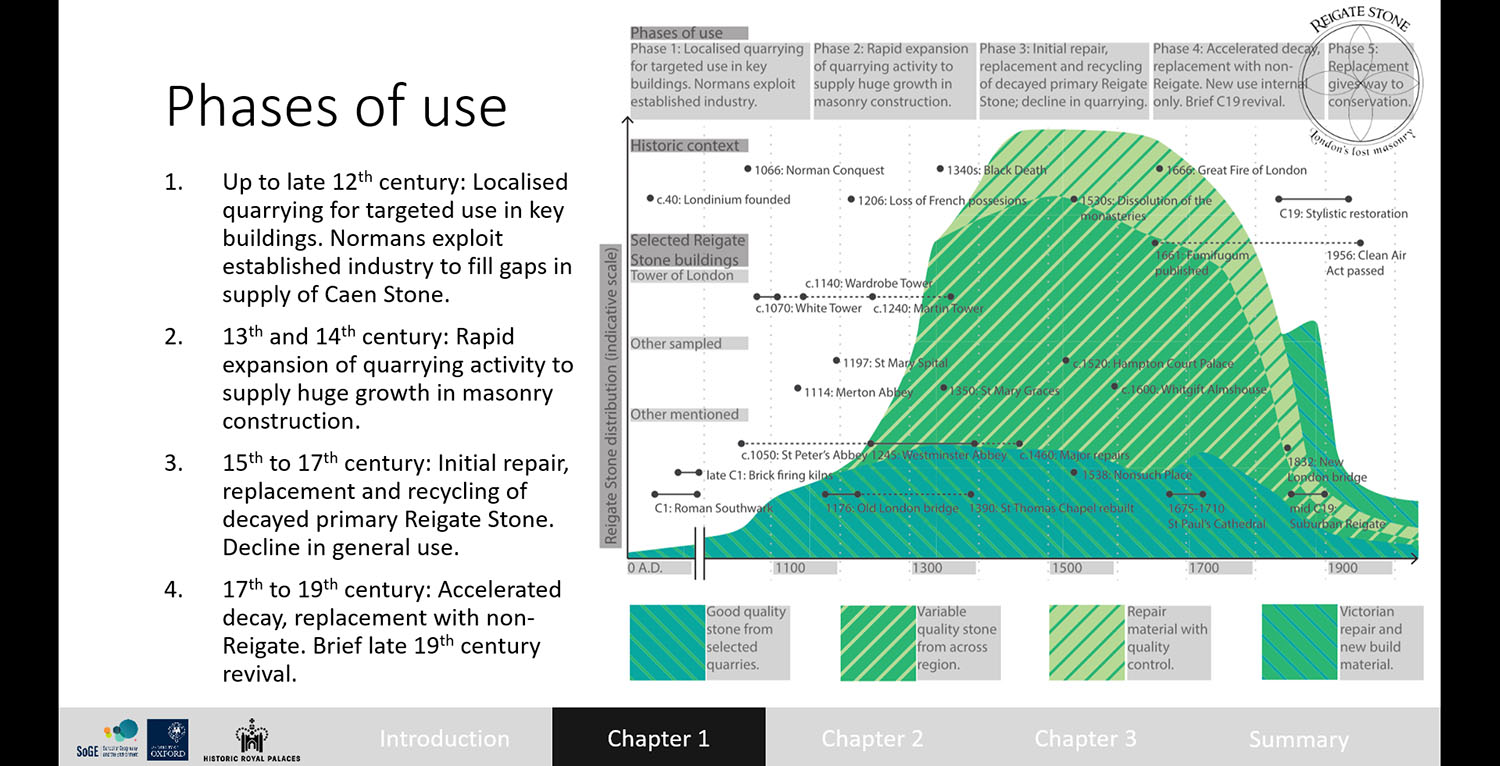
So, trying to understand what I call the socio-economic context involved constructing a timeline of quarrying and use, to try and identify and assess broad changes or patterns which might cut though some of the complexity in scientific taxonomy. And to give an abridged version of that, I would divide the timeline into four phases of use. And I should point out here that this graph is just a conceptual framework, rather than a precise representation of how much stone was being quarried or used at any particular time. A first phase of selective use in buildings extends as far back as the Roman period and ends in the 12th or 13th century. It seems that building stone came from a relatively small selection of quarries, or mines, which delivered good quality building stone. Up until the 11th century, demand was low and exploitation of the beds was limited. Then came the medieval stone building boom and riding the crest of that wave came the Norman builders. But initially they favoured their native Caen Stone, so although there was an increase in the use of Reigate Stone we can still speak of a selective use in terms of the natural variability of the beds. From the mid-13th century begins a phase of rapid expansion. There's a huge increase in the number of Reigate Stone buildings and there's an associated influx in new quarries and stockpiling sites, and although this includes quarries which were specifically opened for single large building projects, such as the expansion of the Tower of London in the 1240s, the net effect is an increase in the variability of the stone and an increase in the supply of less well-sourced stone. And this meant that by the 15th century a phase of repair, recycling and replacement was underway, which corresponds with a renewed selectivity, in terms of a more considered architectural use of the stone to protect it from exposure, but probably also in terms of a more careful exploitation of the beds. So there is a levelling off and a gradual decline in the amount of visible Reigate masonry as lesser quality material begins to decay, especially when brick and other stone types from further afield begin to arrive in London. This phase lasts into the late 17th century. As London's environment becomes increasingly polluted through the 18th and 19th centuries there's a corresponding increase in decay, and even the harder, more well-suited Reigate Stone is widely replaced. The final phase of use as a building stone is a brief resurgence during the Victorian era, both for some new buildings and for some repair work. But it also sees the introduction of harder, cementitious mortars and renders which are less well suited to protecting vulnerable masonry.
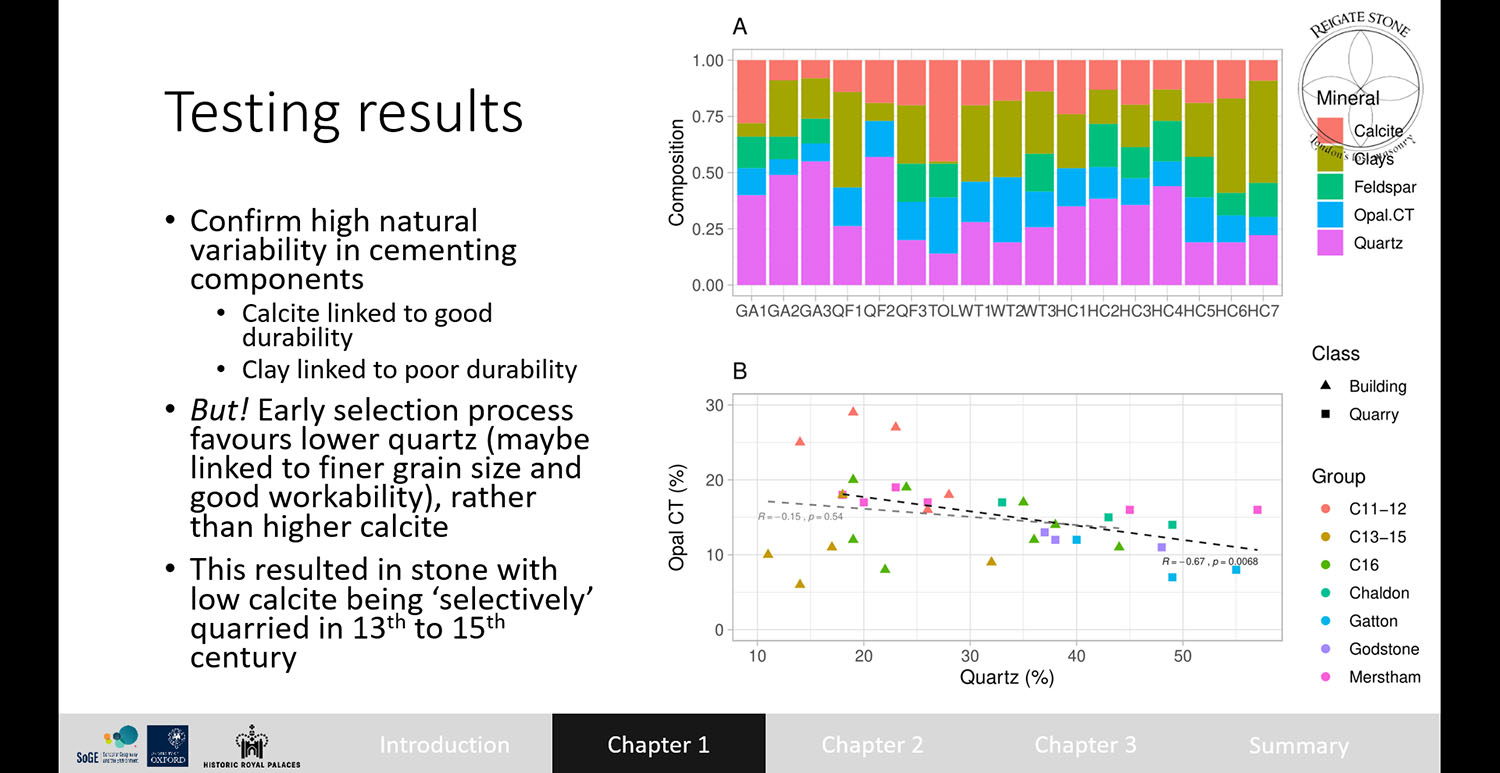
So the overall picture is a staggered, at times rapid increase in the use and variability of the stone in building work, followed by a staggered, at times rapid decrease in surviving fabric overlaid with a complex pattern of repair and replacement. To get a better understanding of what that might mean in terms of the resilience and ultimately the conservation needs of leftover Reigate masonry, the next step was to do material testing. I had access to a set of samples, which included material from a wide range of different buildings dating to different centuries and also from several different quarries. We performed a variety of different laboratory-based tests on these samples, and the aim was to relate mineralogical variation, especially in terms of those three cementing components I mentioned earlier, calcite, Opal-CT and clay, to physical characteristics known to affect durability, like density. And this confirmed what we already know, that higher calcite corresponds to better building stone and higher clay content to worse. But although the sample size in this experiment was small, there was also a pattern of change in characteristics across time, and between samples taken from buildings and samples taken from quarries. And essentially what that pattern showed was that building stones were selectively quarried, but there were phases of better and worse quality which correspond to the phases of use I outlined earlier.
Now, the historical overview and the material analysis can each provide only a snapshot. But the compelling finding is that those snapshots line up and tell the same story. And that story is that there was this explosion in the use of Reigate Stone in the late medieval period which introduced lesser quality building material. And that tarnished the reputation of Reigate Stone in a way which persists until today. If it was well sourced and properly looked after, it actually holds up pretty well and is not so much a problem stone as a stone which calls attention to other problems in the historic built environment, such as the effects of air pollution or unsuitable conservation materials and, increasingly, of climate change.
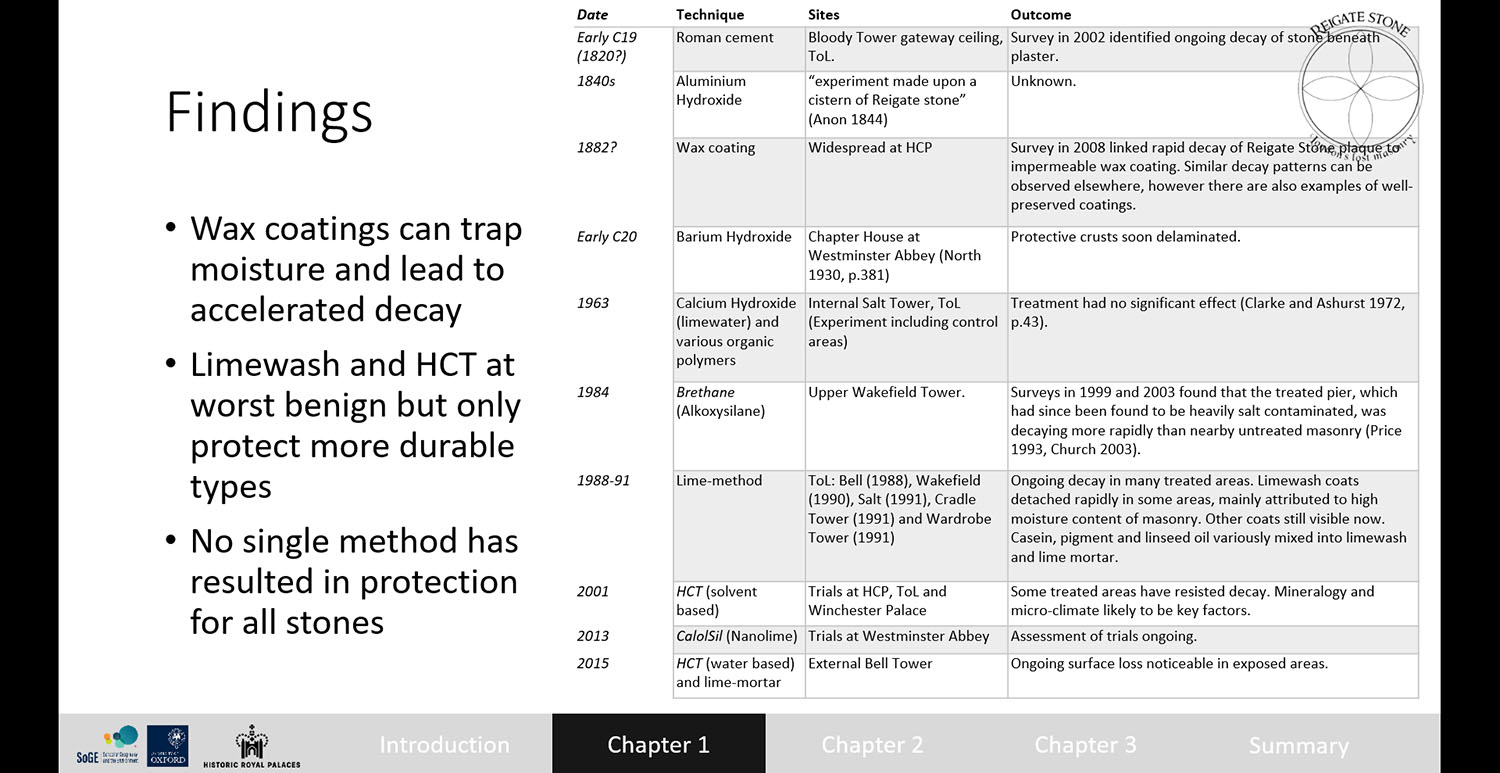
The second part of the chapter assessed the long-term success of different conservation techniques used on Reigate Stone. It examined three in particular. Waxes or oils, which were widely used in the late 19th and early 20th century; the lime-method, and in particular limewash coats, which are based on traditional treatments and re-emerged in the 1980s; and HCT, an ammonium tartrate based treatment that was trialled in the early 00's and used in the recent conservation of the Bell Tower. We were able to make use of a really valuable resource, a test-wall, erected in the Tower moat in 2001, which contained different types of Reigate Stone and had been treated with HCT. That helped to calibrate the rapid-surveys we did elsewhere at the Tower and Hampton Court Palace. To quickly summarise the key findings: many previous conservation attempts appear to have accelerated decay, for example some of the wax coatings at Hampton Court. Limewash and HCT can help protect, but they are only long-term effective on more calcareous stone, which as I said is already more resilient to decay. The table just summarises all the past techniques we discovered, and the main point is that no techniques have been effective at protecting the most vulnerable Reigate masonry. But in terms of outlook, I think it would be very useful to revisit the idea of regularly applying coats of limewash, and to begin that by examining in more detail the effect on different types of Reigate.
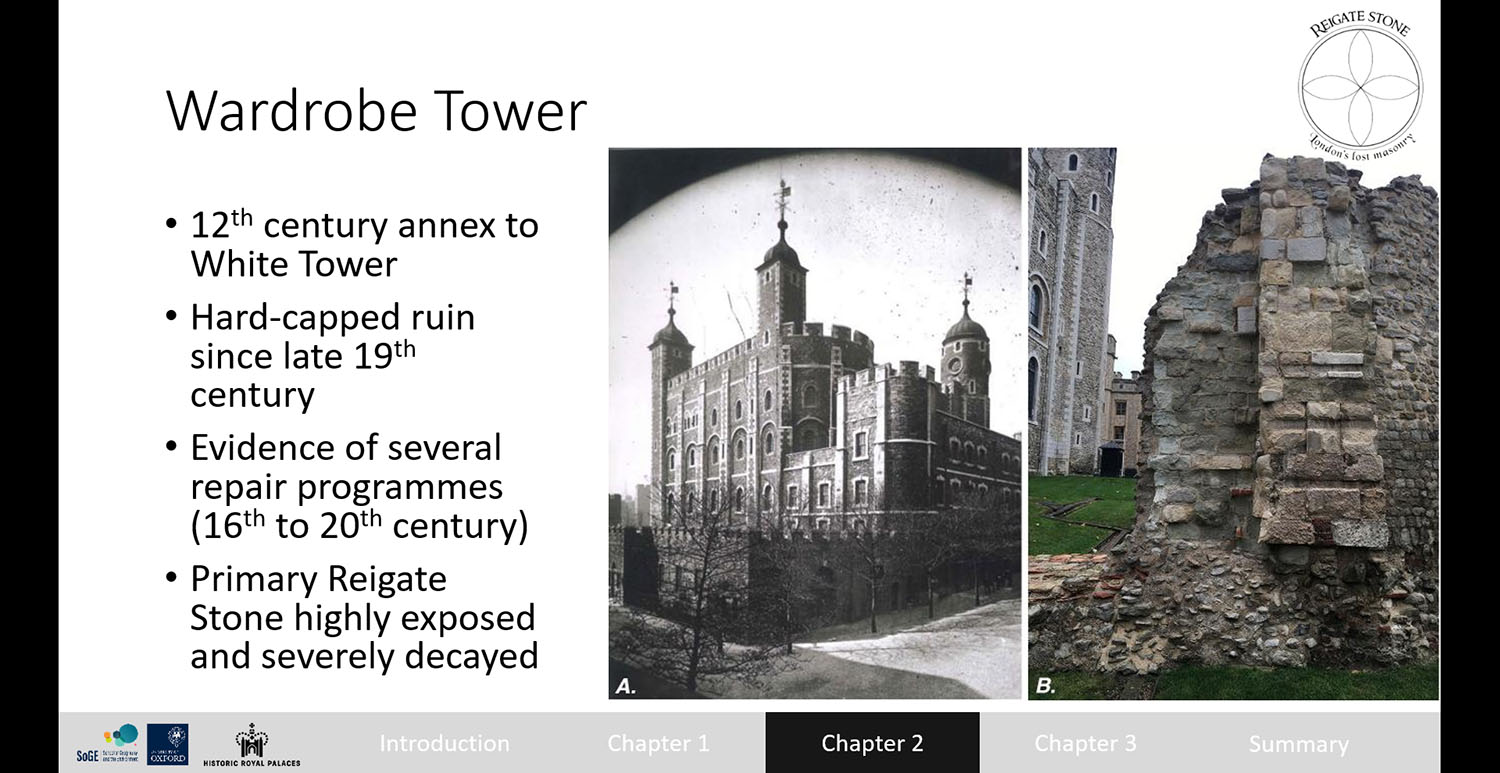
The second chapter used the recent conservation of the Wardrobe Tower as a case study. The Wardrobe Tower was a 12th century annex to the White Tower, probably built on top of a Roman mural tower, which was progressively extended and covered over the centuries until it was stripped back and left as a ruin in the late 19th century. So, there's primary medieval masonry and a patchwork of later stone and mortar repairs. Most of the Reigate is highly exposed and heavily decayed. I shadowed the work being done by Carden and Godfrey Architects and Sally Strachey Historic Conservation back in 2017, much of which focused on a careful removal of the hard mortar and repointing using soft, lime putty. We decided this could be a good opportunity to look in more detail at the role of pointing mortar and different mortar recipes in the moisture regulation of historic masonry. As many of you will know this has been a hot topic in recent years, but much of the research has been done in controlled environments, in laboratories or at bespoke test walls, which are great at helping us answer specific questions, but by definition have to ignore some real-world complexity. And as a very quick summary for those unfamiliar with the role of pointing mortar, what you're looking for is a joint between stone blocks that helps to limit moisture ingress but still draws moisture out from the stones, and generally mitigates moisture fluctuation and associated decay phenomena such as salt crystallisation.
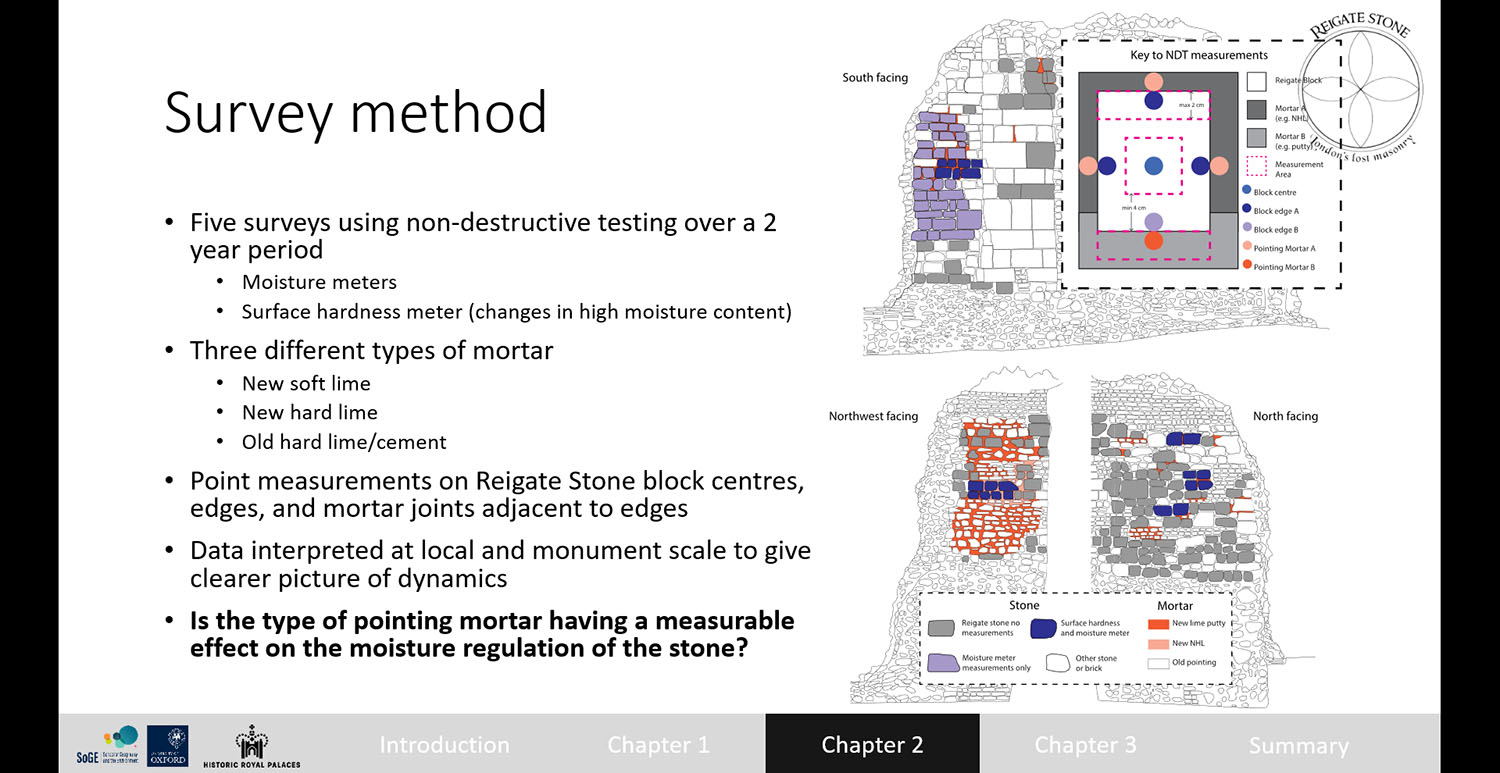
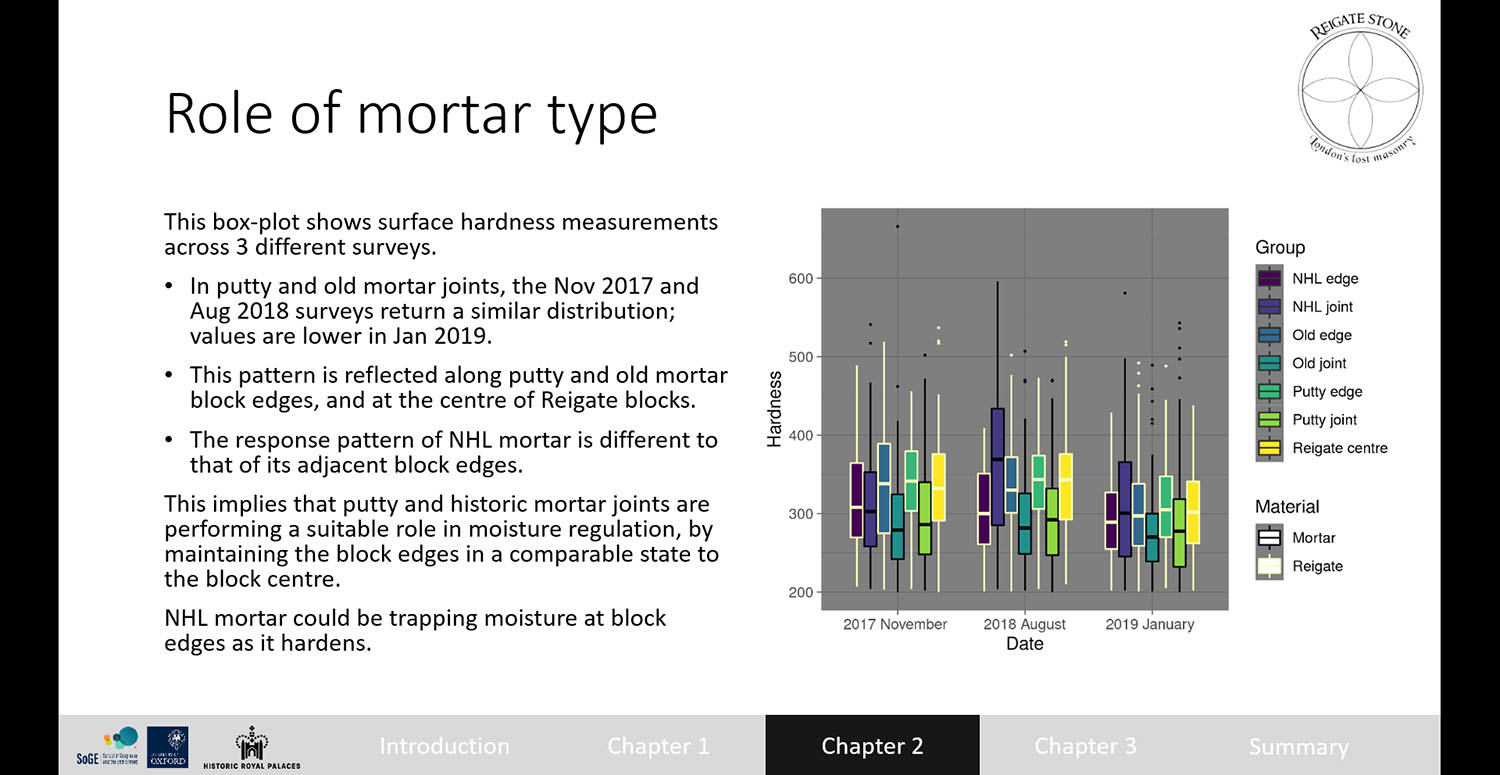
So, we developed a methodology based on non-destructive techniques used in repeat surveys over a two-year period after the repointing had finished, to investigate changes in moisture content at different scales. So, this would fall in to the category of 'in-depth' survey; a long-term monitoring programme using multiple devices to observe interacting parameters at multiple scales. And really what we wanted to find out was, can we identify differences in the way the stone is responding to the environment - to rainfall, to sunlight, to atmospheric moisture - and link these to the adjacent pointing mortar. Is the type of pointing mortar having a measurable effect on the moisture regulation of the stone? And we looked at 3 different mortars. The lime putty mortar used in the conservation work, a natural hydraulic lime which was used in a couple of small test areas as part of this experiment - so that's a mortar which is harder than what should usually be specified for this type of vulnerable masonry, but which despite an increasing awareness in the industry is still often used - and finally we looked at older NHL and cement mortars from previous conservation works, one or two of which still dominate some areas of the masonry. And what we discovered was, yes, there does seem to be some pattern of wetting and drying of stone edges which is linked to the type of pointing mortar at that stone edge. There was evidence that the lime putty mortar outperformed the natural hydraulic lime. But interestingly, the older natural hydraulic limes - so leftover remnants from conservation work in the late 20th century - performed similarly to the new putty mortar.
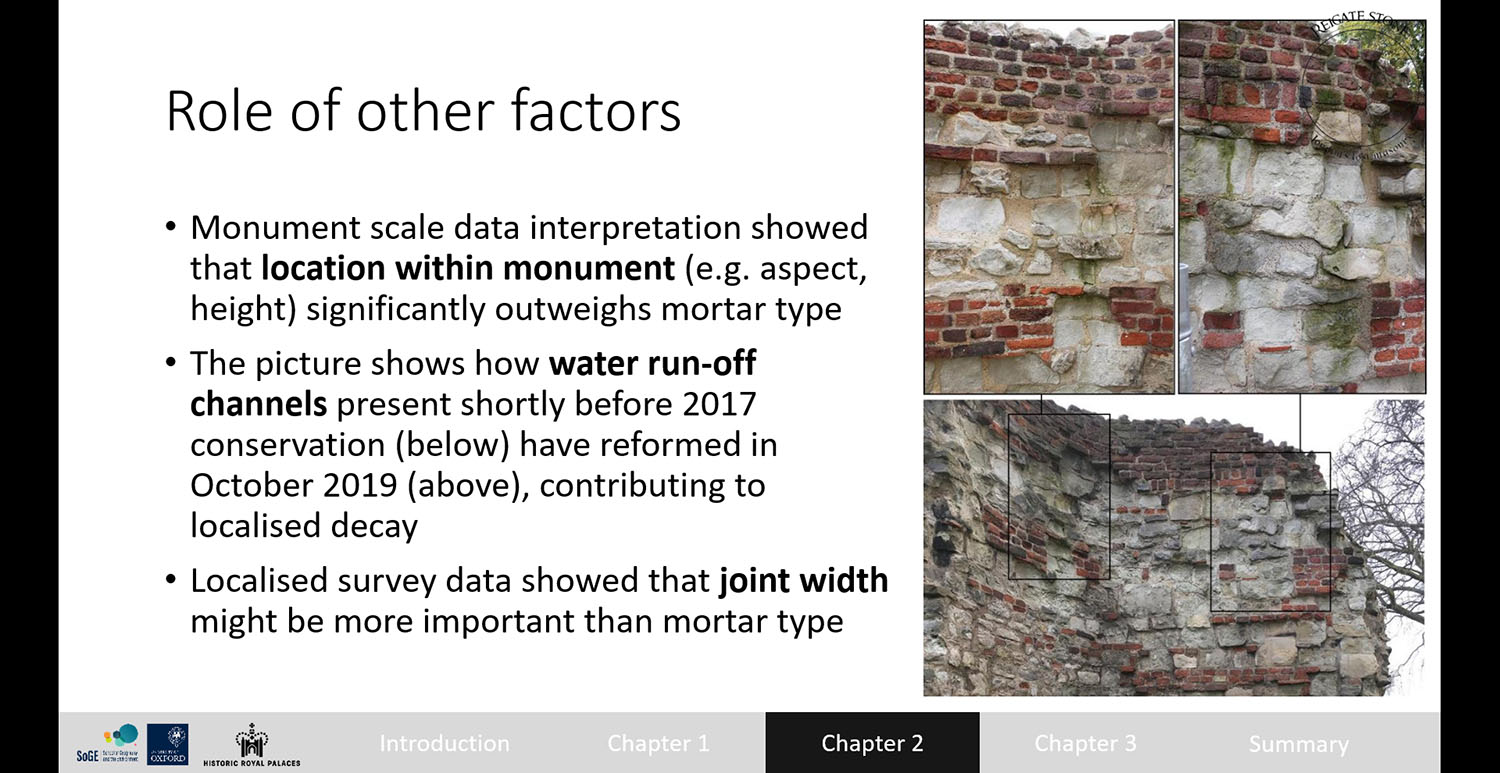
We need to be cautious about drawing too much conclusion from this study. But it does highlight an interesting question about to what extent initially unsuitable mortar recipes can weather and soften over time, and quite how dogmatic we need to be about removing them when they may actually have found a kind of balance with their masonry. Unsurprisingly, there are other factors which significantly outweighed the effect of mortar type. Exposure is probably the most obvious one, but this goes beyond the question of whether the masonry is facing north or south and also includes micro-topographic features, such as shelters and water run-off channels. But another factor that was shown to be significant was the width of the mortar joint, with wider joints performing less well at protecting stone edges from fluctuating moisture. So again, this raises the question about whether to remove an older, harder pointing mortar, and risk a widening of the joint through associated loss of material, even if that joint is then repointed using a more suitable mortar.
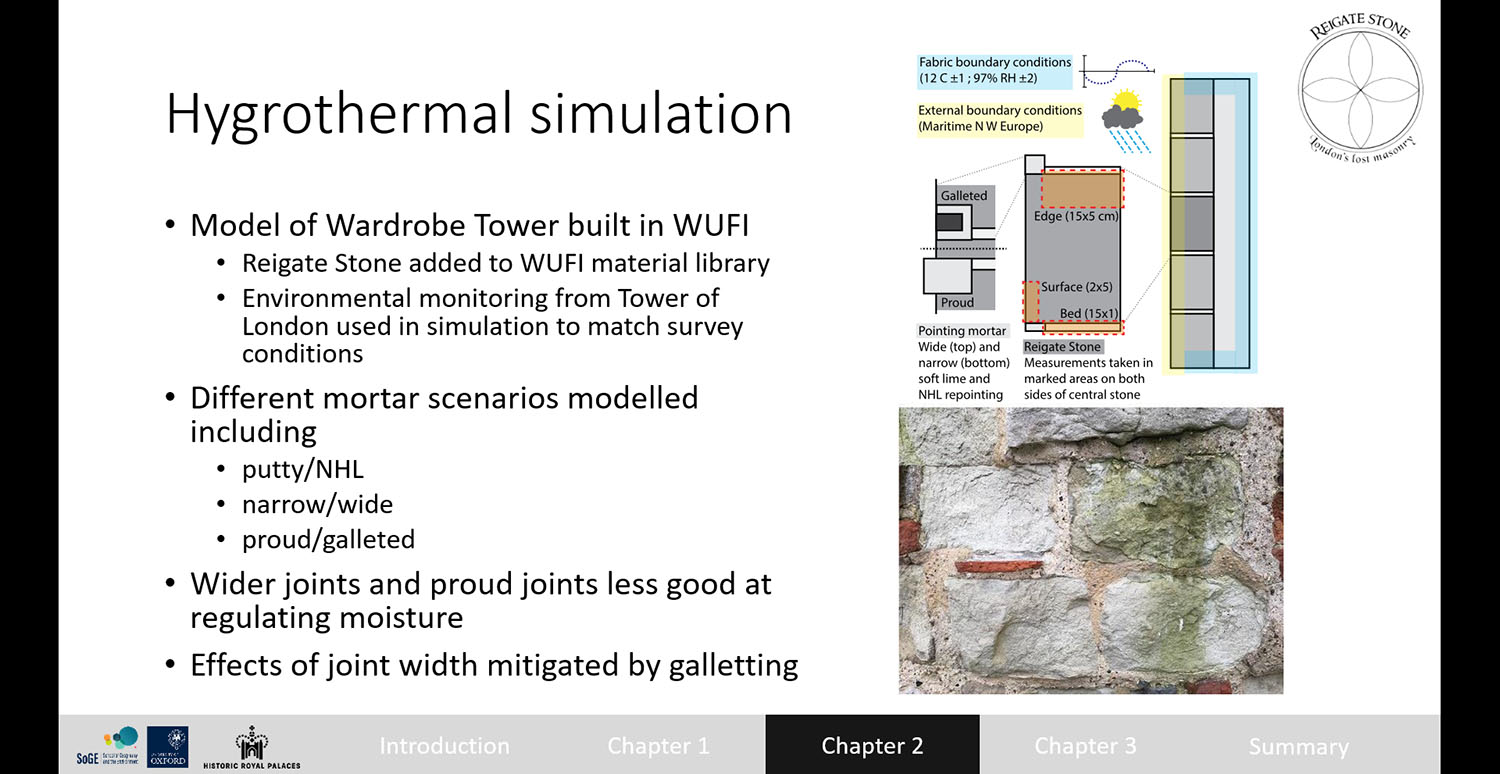
We decided to look at this particular aspect a bit more closely in the secondary project of this chapter. We modelled different masonry scenarios that had been surveyed at the Wardrobe Tower in a simulation tool called WUFI, which is a German acronym for integrated temperature and moisture transport. You input various material properties that are measured in the lab, for the different mortar types and for our Reigate Stone, and then you simulate long-term exposure to a climate, and we used real climate data which had been gathered at the Tower of London during my research to reproduce the actual conditions of my surveys. So this enabled some validation of the model. And the simulations supported this argument that the width of a mortar joint can outweigh the type of mortar in regulating moisture, but I think the most interesting finding of the model was that galletting mitigates the effect of widening joints quite well. Galletts are small pieces of stone pressed into the mortar joint during pointing. It's well known in conservation practice, especially in certain parts of the country, and there's probably some very useful anecdotal evidence, but there hasn't been much research done on it. What I could find was mainly focussing on the improvement of mortar resilience, so less surface area for cracks to appear, but our findings suggest that it could have a wider benefit for vulnerable masonry systems.
All of these findings need to be treated with caution. This turned out to be an incredibly complex, long-term project with several dead-ends and massively complicating factors. But what we were able to piece back together from this valuable real-world data, about weathered mortar, and the role of micro-contextual features, joint width, and galletting can now be fed back into controlled experiments and eventually deliver more conclusive evidence. I think one really useful next step would be to make a new Reigate Stone test wall, which accommodates some of these factors, and begins to look at the masonry system as a whole when assessing conservation techniques.
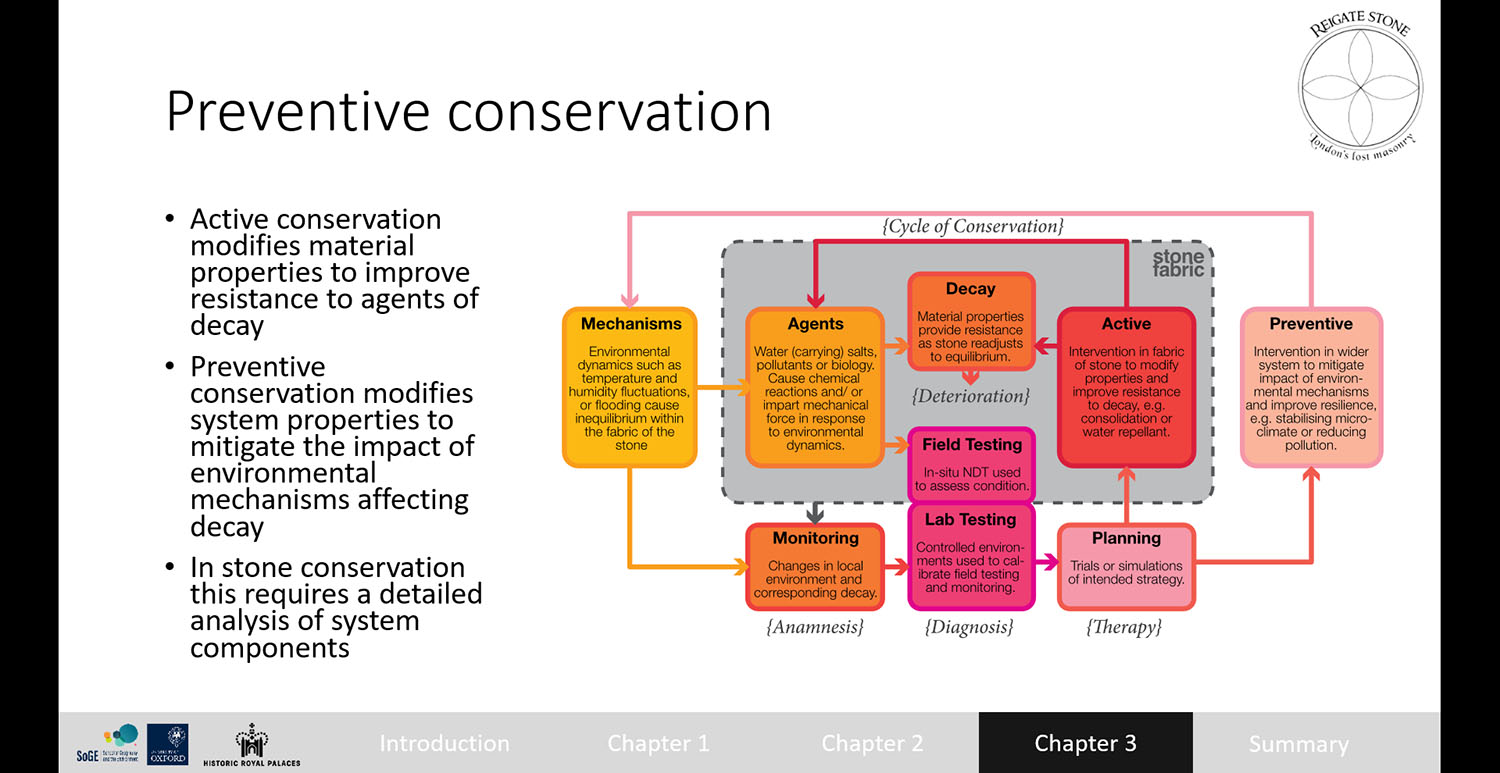
The third chapter looked at Reigate Stone decay processes in more detail. Again, there were two parts. The first part was a case study at the Bell Tower, the second part was a laboratory experiment. And there was an overarching research question to both of these parts along the lines of, are decay patterns a good indicator of underlying decay process. Why is this important? Well, a big driver for this project was to explore more preventive conservation strategies. So that's measures which move away from the type of active, or interventive, techniques I examined in the first chapter, which as I explained had mixed success. And it's measures which might help decrease the number of repeat interventions at monuments like the Wardrobe Tower. Rather than change material properties to make masonry more resistant to decay processes, what preventive conservation does is change the environmental parameters affecting decay. A great example for Reigate Stone was the Clean Air Act in 1956. Almost at a stroke, sulphation ended. But beyond these big 'total environment' policies, it can be hard to design effective preventive strategies.
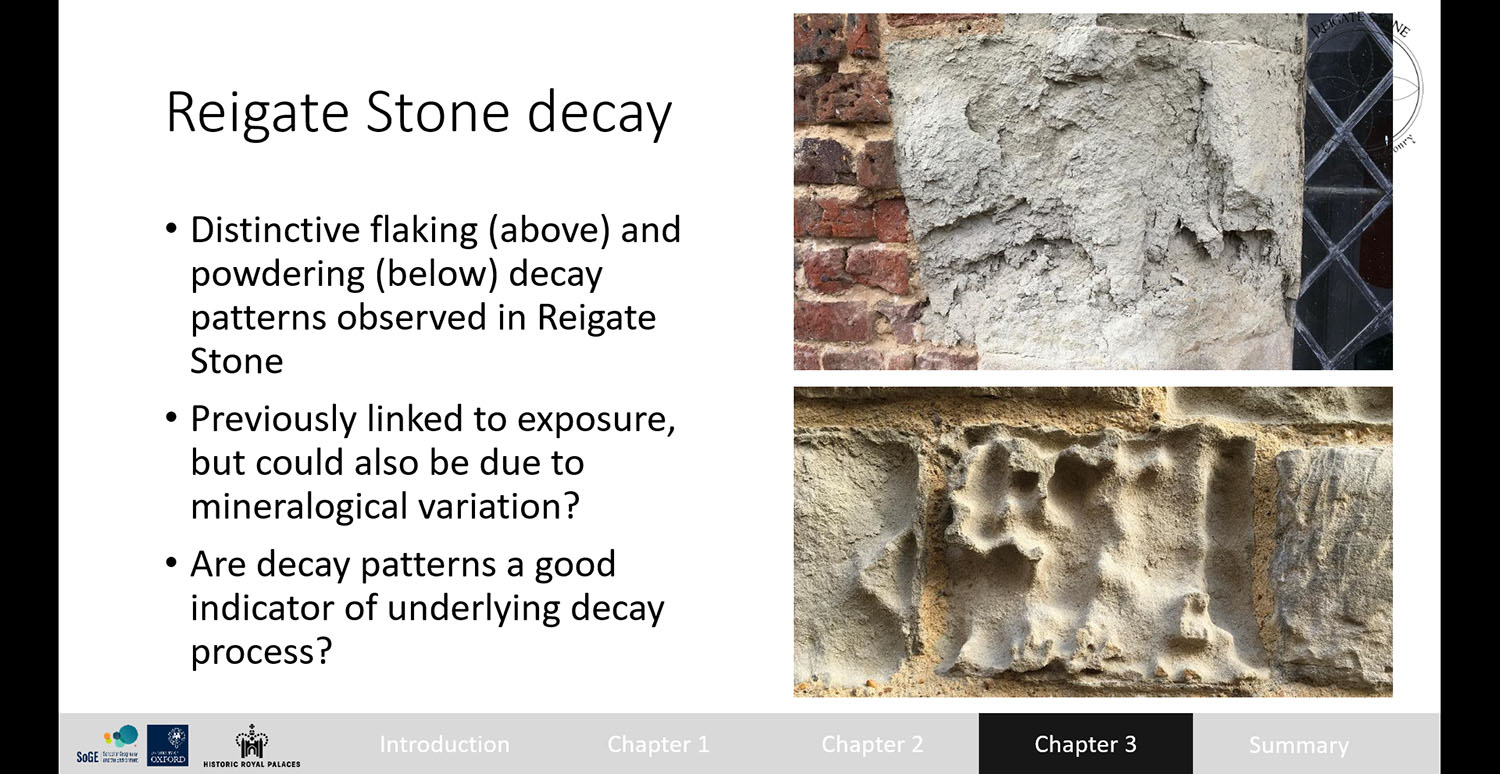
We know that all sorts of processes can be damaging for vulnerable stones: pollution, driving rain, rising damp, thermal shock, but conclusively identifying these in any one instance and figuring out how to prevent the ones that are actually causing damage is very complicated. And, just like with unsuitable interventive conservation, unsuitable preventive strategies can end up doing more harm than good. What we decided to do was to see if decay patterns were a good indicator of underlying decay process, and therefore in turn a point of reference for the type of preventive strategy that would mitigate ongoing decay. Reigate Stone has quite distinctive flaking and powdering decay patterns, and it's been previously suggested that these correspond to level of exposure.
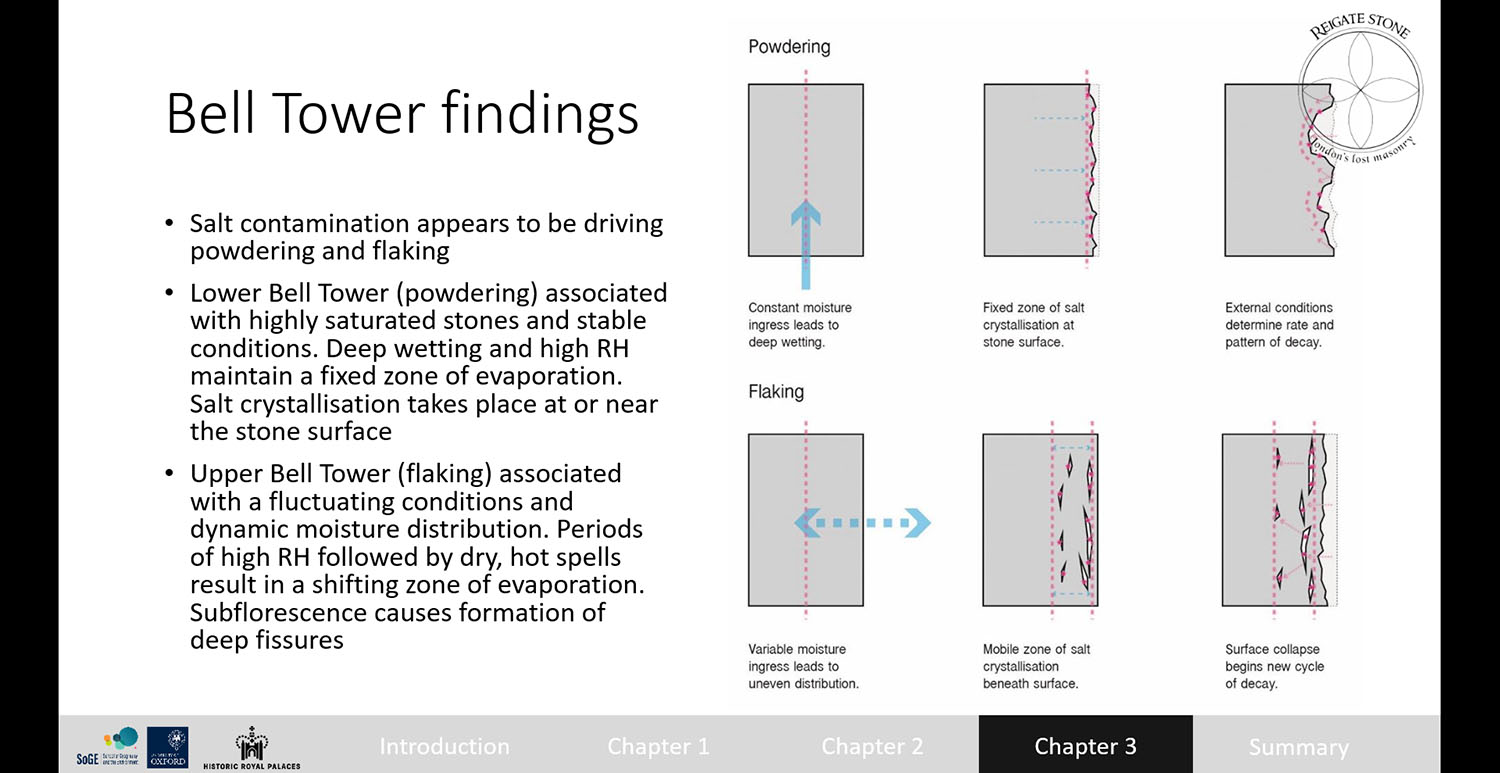
So, in the first part of the project we identified areas of flaking and powdering masonry in the Bell Tower, and then surveyed and monitored these to characterise the decay and link it to measurable environmental parameters. And we were able to identify distinguishing factors affecting salt driven decay in powdering masonry and flaking masonry which seemed to make sense. Powdering masonry dominated the cave-like environment of the lower Bell Tower, which had a consistently high relative humidity and masonry close to saturation. This meant salts were crystallising near the surface. In the flaking masonry of the upper Bell Tower, temperature - and therefore RH - and moisture content of the masonry fluctuated more widely. This meant there was a mobile zone of salt crystallisation deeper beneath the stone surface, which would led to the gradual emergence of these larger flakes.
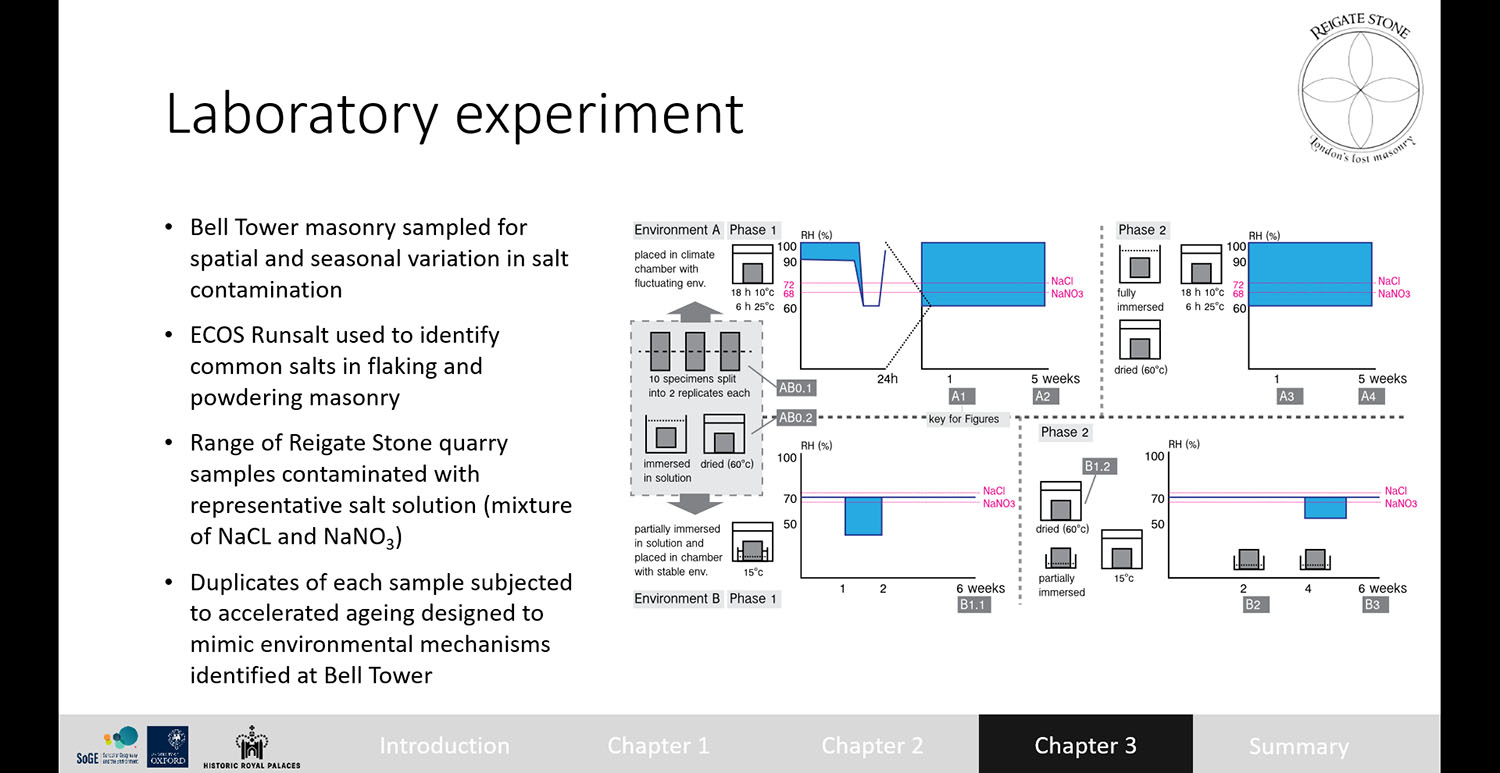
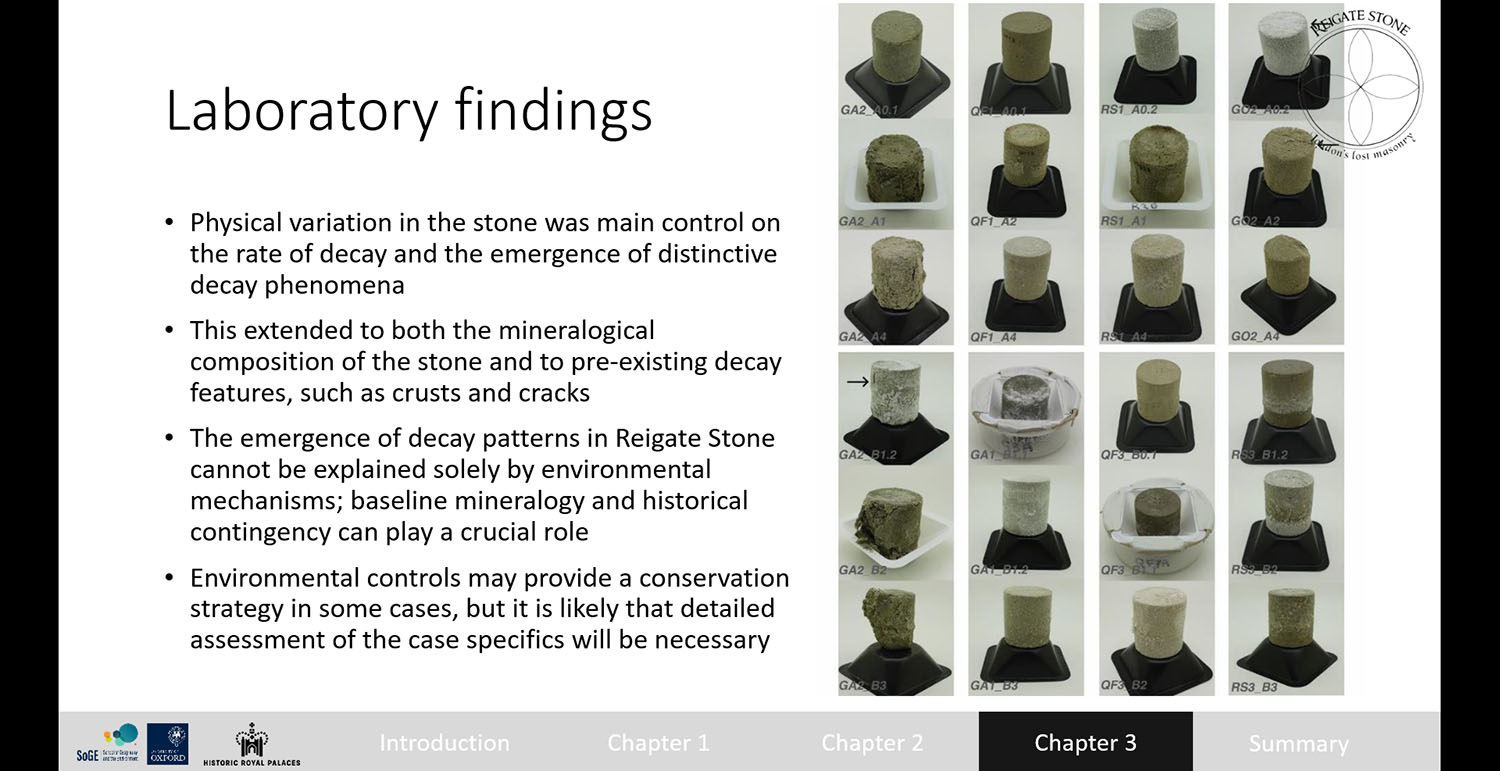
The next step was to try and replicate these phenomena in the laboratory. So we needed to design a controlled experiment where we removed as much of the other potential variability as possible - the mineralogical variability of the stones, the variability of different salt contamination - and examined only the influence of differing environmental mechanisms. We did that by sampling the masonry from the Bell Tower and producing a salt solution which approximated both environments, and using that to contaminate a range of different mineralogical variants from our archive of quarry samples. Then we put replicates of each samples into two different climate chambers based on the different mechanisms we had distinguished in the powdering and flaking environments. And the findings were a lot less clear than they had been in the initial survey. There was some indication that we were reproducing the observed decay phenomena, but it was also clear that other variables were significant factors. So as predicted in the first chapter, the baseline mineralogy hugely affected the rate of decay, but we also saw that pre-existing flaws contributed to the emergence of flaking.
Ultimately what we found was that you can't remove the type of salt or the material characteristics of the Reigate from the equation when trying to identify the cause of a particular decay pattern. This doesn't mean that the links between specific environmental mechanisms and observable decay phenomena that we saw at the Bell Tower aren't real, but it does mean that characterising decay patterns is unlikely to be a reliable diagnostic technique in every instance. So, designing targeted, preventive strategies based for example on improved shelter and controlled RH will need a more detailed analysis of each instance. And that's the space for ongoing research in this area, this is where we need to think about how the next generation of portable devices can help us with this detailed analysis.
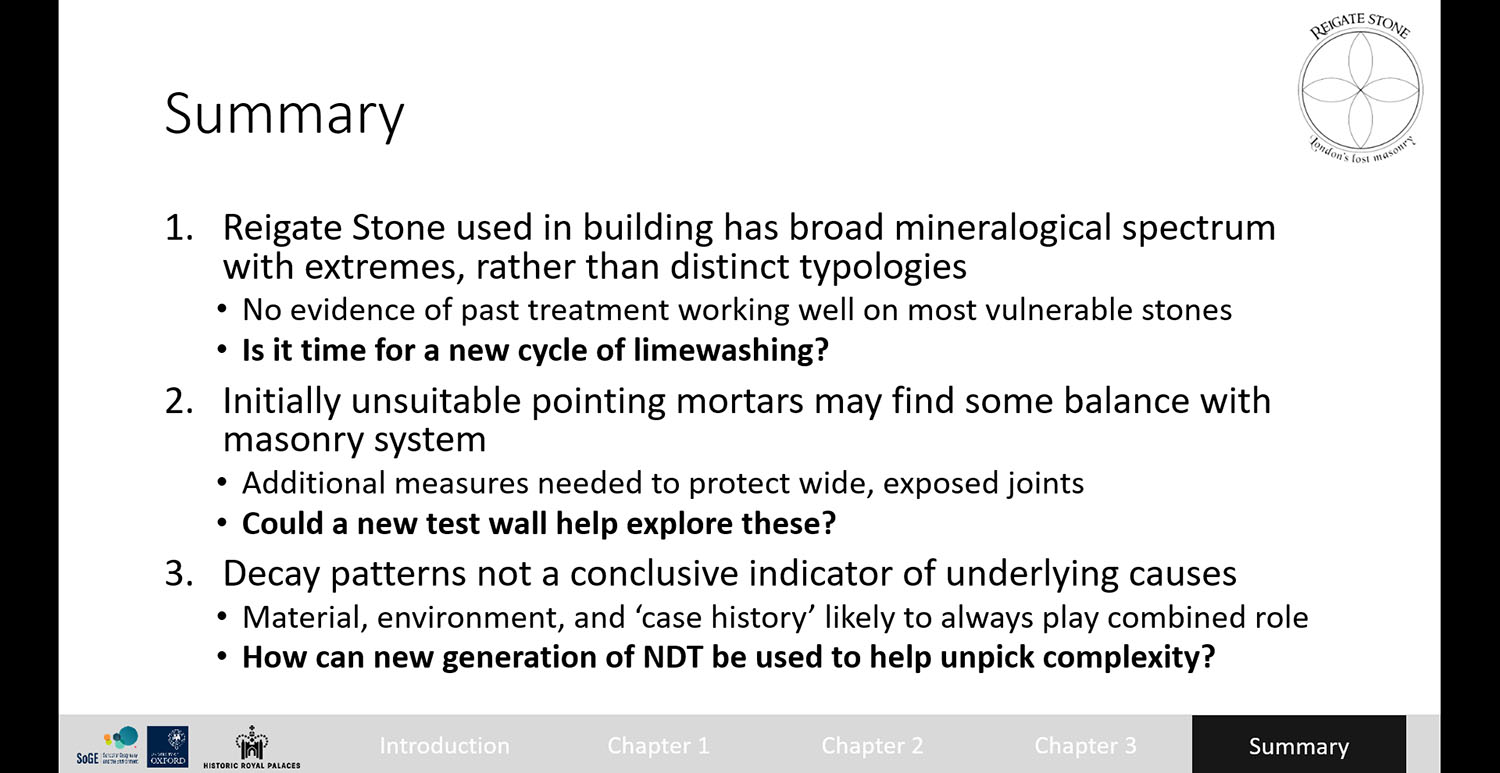
I'd like to conclude by first summarising those key findings and outlooks, and then, if you'll allow me, by offering a thought on what this all means in the grand scheme of things. Reigate Stone has a very high natural variability, which has resulted in very different extant conditions, and this has been compounded by a complex history of replacement and repair. There are some viable conservation treatments for protecting more durable types, but nothing as yet has been proven to work for more vulnerable types. But I think the possibility of a renewed cycle of limewash around 30 years since the last here at the Tower, should be investigated and could shed more light onto the typological variations that remain in the historic fabric. Although softer lime putty pointing mortars are clearly more suitable for Reigate Stone, their use needs to be carefully weighed up against the potential disruption an intervention might cause to a masonry system that has achieved a kind of balance with past interventions that appear ill-advised from today's standards. And additional measures might be necessary to limit the need for repeat interventions. Protecting against localised water run-off and galletting wide joints could be two examples. And I think a new test wall would be extremely useful for exploring these in more detail. Decay patterns can give us some clue to underlying decay process, but if we want to diagnose the precise mechanisms in order to design appropriate preventive strategies there is probably no shortcut to a full analysis of specific circumstances. But, devices for helping us with this analysis are improving all the time and the next round of research could augment the non-destructive techniques I used with a new generation of techniques.
I briefly mentioned narrative at the start of my presentation, and one thing that really struck me while I was doing this research, is how much our appreciation of the historic built environment can change, over time and across or even within different cultures. And there is often a kind of dissonance between the forces that affect change, the shifting attitudes to those changes, and our attempts to respond to them. If we look back now on some of the actions that were taken 150 years ago in the name of good practice for the historic environment, can we really be sure that what we're doing today is in the interests of future generations? And I know this is a question that anyone who is involved in conservation will have asked themselves many times before, so I'm not going to pretend I have an answer, but all I want to say is that heritage only matters if we continue to give it meaning. And this kind of meeting of disciplines and minds today, and I hope in a small way work such as that presented in my thesis, plays a part in this, because it helps keep the perspective we have on these old stones fresh, and relevant to the greater challenges of our day.
Thank you.